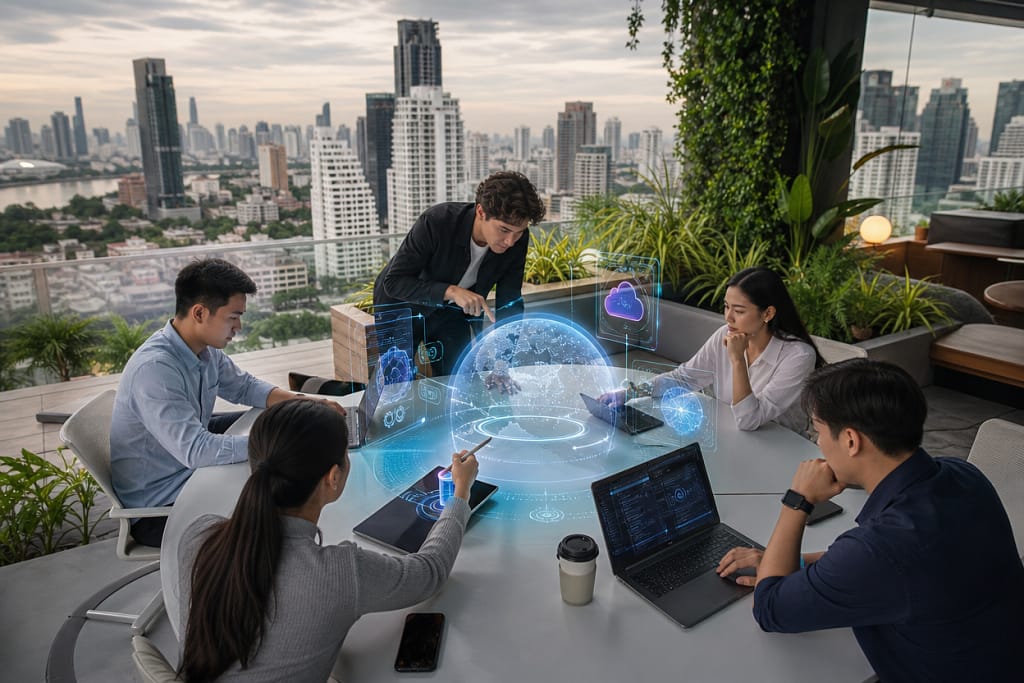
AI-Driven Code Maintenance in 2026: Transforming Software Reliability
AI-driven code maintenance is rapidly reshaping how Australian engineering teams manage complex software systems. In 2026, advanced models analyse repositories, telemetry and deployment data to identify bugs, vulnerabilities and performance bottlenecks before users are impacted. These capabilities integrate naturally into intelligent software development workflows, providing continuous feedback during coding, review and release. Teams increasingly rely on custom AI applications to triage incidents, propose targeted fixes and validate changes through dynamic testing. As these tools mature, they are shifting maintenance from reactive firefighting to proactive optimisation across the entire lifecycle.
Modern platforms apply machine learning for bug fixing by mining version-control history and production logs to detect recurring patterns of failure. When similar symptoms arise, AI assistants can recommend proven patches or generate candidate code changes for human review. This dramatically reduces mean time to repair while preserving consistency with established coding standards. In parallel, static and dynamic analysis engines surface security weaknesses and performance anti-patterns, guiding developers towards more robust implementations. Over time, these feedback loops create a self-improving environment where code quality and operational resilience steadily increase.
Core Capabilities of AI-Driven Code Maintenance
Automated code review now goes well beyond basic linting, with models reasoning about intent, architectural constraints and edge conditions. These systems flag risky modifications, highlight hidden side effects and propose safer implementations in line with AI-powered refactoring strategies. Predictive maintenance for applications leverages historical incident data and runtime metrics to pinpoint failure-prone modules before they degrade user experience. In parallel, AI tools for software teams generate and continuously update documentation, ensuring API references and runbooks remain aligned with evolving codebases. Together, these capabilities enhance maintainability, reduce technical debt and support disciplined AI in lifecycle management.
- Automated reviewers inspecting pull requests for security, performance and style regressions.
- Telemetry-driven models forecasting components likely to fail in upcoming releases.
- Refactoring engines proposing modularisation, de-duplication and interface clean-ups.
- NLP systems drafting and updating technical documentation and user guides.
- Automated software testing with AI generating high-coverage regression and edge-case suites.

Legacy modernisation is another critical dimension of AI-driven code maintenance for Australian organisations. Models can infer higher-level intent from procedural or monolithic code, proposing incremental migration paths to services or cloud-native architectures. When combined with AI Software Development workflows, teams can encapsulate fragile components behind stable interfaces while gradually refactoring internals. Continuous integration pipelines orchestrate these changes, executing targeted regression packs generated by intelligent test synthesizers. This approach lowers the risk of regression, shortens feedback cycles and supports the future of AI in development across large, heterogeneous portfolios.
Teams that embed AI-driven code maintenance into their toolchains move from reactive incident handling to engineered resilience, reducing cost while increasing delivery velocity.
Strategic Adoption and Next Steps
To realise full value from AI-driven code maintenance, engineering leaders should start with clearly scoped pilot projects and measurable success criteria. Target domains such as security scanning, test generation or refactoring suggestions where models can deliver rapid, low-risk gains. Over time, extend coverage to incident prediction, root-cause analysis and continuous documentation, building a cohesive fabric of intelligent software development practices. Finally, invest in governance, monitoring and developer training to ensure these systems remain reliable, transparent and aligned with organisational standards. Now is the ideal time to assess your pipelines and plan how AI tools can uplift quality, resilience and throughput across your software lifecycle—take the initiative to evaluate, experiment and embed these capabilities in your next maintenance cycle.