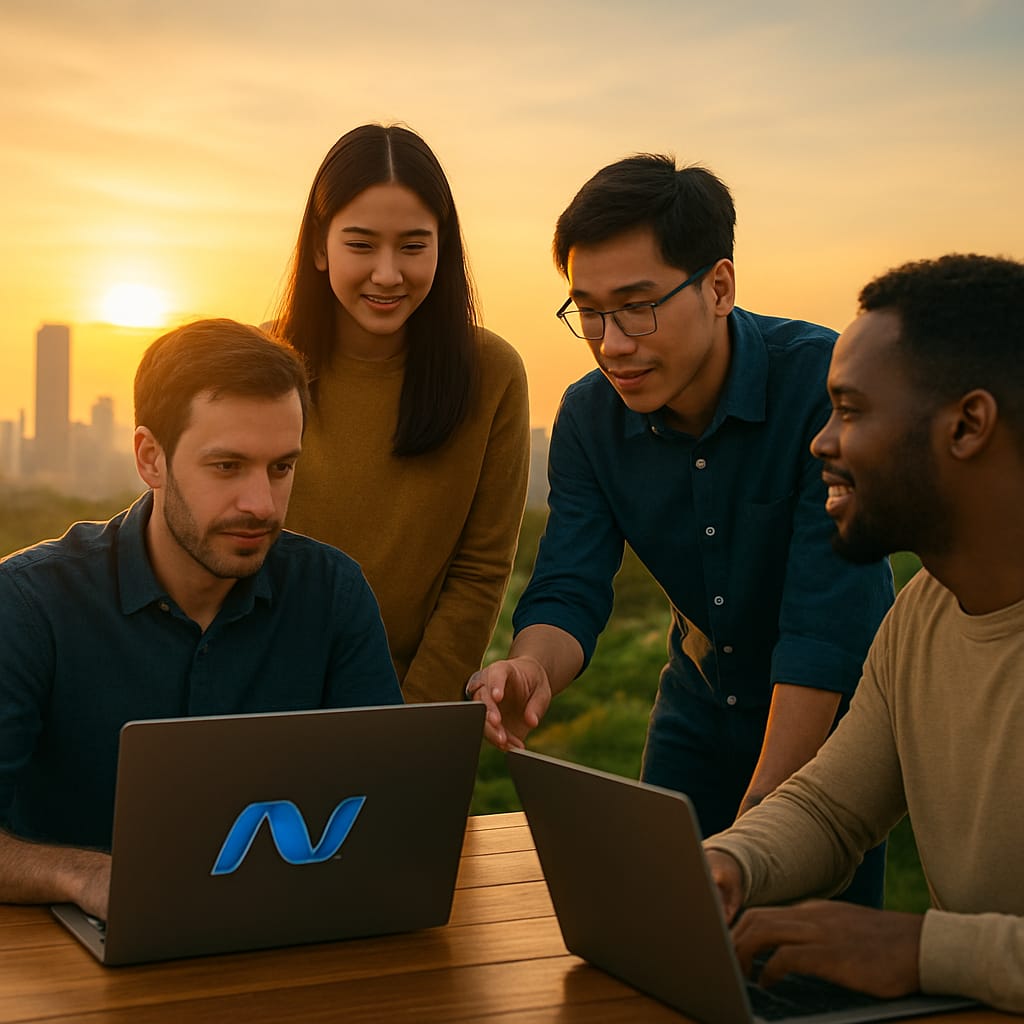
By 2026, software development teams across Australia are redefining collaboration as AI becomes a core part of everyday engineering practice. Modern teams no longer see AI as a novelty but as an operational layer that shapes how they plan, code and ship software at scale. Within this landscape, AI Development Services provide the backbone for integrating models, pipelines and governance into existing toolchains, ensuring consistency rather than ad hoc usage. Engineers increasingly rely on intelligent software development environments that surface context from codebases, tickets and documentation in real time. This shift is driving measurable improvements in cycle time, quality and transparency across distributed squads. At the same time, leaders are under pressure to balance speed with security, requiring clear policies on prompts, data access and auditability. The organisations that succeed are those that treat AI as a team member, not just another tool.
Day-to-day workflows now blend human expertise with automation in software delivery to minimise friction between stages of the lifecycle. During planning, models summarise RFCs, detect overlapping epics and highlight architectural risks before work begins. In coding, collaborative AI coding assistants generate boilerplate, suggest refactors and surface relevant patterns from legacy services without interrupting developer flow. Review processes are augmented by tools that flag risky changes, missing tests and potential performance regressions early. Teams also apply machine learning in coding workflows to predict areas of the codebase most likely to fail under new load profiles. These capabilities free engineers to focus on design trade-offs, stakeholder alignment and long-term maintainability instead of repetitive tasks. Importantly, organisations establish explicit review gates to ensure that human judgment remains central to critical decisions.
How AI transforms collaboration and pairing in 2026
AI pair programming is now embedded in the culture of mature engineering organisations, reshaping how knowledge is shared and decisions are made. Developers treat agents as rotating partners that can instantly generate alternatives, run experiments and draft tests while humans scrutinise architecture and domain rules. In many Australian teams, AI Software Development practices include session logging so that insights from exploratory pairing are searchable for future work. This reduces the risk of knowledge silos, particularly in complex microservices environments where ownership is fragmented. AI-powered dev collaboration tools also help standardise code style and patterns, improving readability for large, distributed squads. However, teams enforce mandatory peer review and secure prompt patterns to prevent leaks of confidential logic or customer data. Over time, this disciplined approach builds trust in AI-assisted recommendations while preserving engineering standards.
- Establish clear policies for when and how engineers should use AI in planning, coding and reviews.
- Track metrics such as lead time, defect density and review coverage before and after AI adoption.
- Maintain human-owned approval gates for production changes and architectural decisions.
- Integrate AI tools with existing CI/CD pipelines to avoid fragmented workflows and shadow IT.
- Invest in training so that engineers understand both the capabilities and limitations of current models.

Remote and hybrid teams rely heavily on AI tools for remote dev teams to bridge time zones and reduce coordination overhead. Intelligent documentation search, code-aware onboarding guides and context-sensitive review summaries mean new engineers can contribute meaningful changes within days, not weeks. Many organisations are experimenting with custom AI applications that map dependencies across repos and automatically highlight cross-team impacts of proposed changes. This is particularly valuable for large enterprises with legacy platforms and multiple product lines. AI-driven software project management dashboards synthesise work-in-progress, risk indicators and capacity forecasts into a single view for engineering leaders. Despite these advances, data from 2025–2026 still shows benefits from periodic in-person sessions for mentoring and high-stakes architectural decisions. The most effective teams use AI to optimise asynchronous work while deliberately designing moments for human connection.
AI will not replace engineering teams in 2026, but the teams that learn to collaborate effectively with AI will outperform those that do not.
Governance, metrics and the future of AI engineering teams
For Australian organisations, the future of AI engineering teams depends on disciplined governance and continuous feedback loops rather than chasing every new model. Leaders define baselines for lead time, incident rates and review depth, then measure how AI interventions shift these metrics in production environments. Security and compliance experts are embedded early to assess training data, prompt logs and model outputs against regulatory obligations. Teams adopting AI-enhanced agile development practices run time-boxed pilots, document patterns that work and standardise them across portfolios. This avoids the chaos of tool sprawl while still encouraging experimentation. To capitalise on these trends, organisations should evaluate their current collaboration practices, identify the highest-friction workflows and prioritise targeted pilots that demonstrate clear value within a quarter.
Now is the ideal moment to modernise your 2026 software development collaboration strategy and move from experimentation to engineered outcomes. Start by assessing which workflows would benefit most from structured AI assistance, from code review to incident response. Partner with specialists who can help design, implement and govern scalable AI capabilities, rather than relying on isolated team-level experiments. As you roll out pilots, ensure transparent communication with engineers about goals, guardrails and expected benefits. By doing so, you will build a sustainable foundation for AI-enabled collaboration that supports long-term innovation, resilience and growth across your software portfolio.