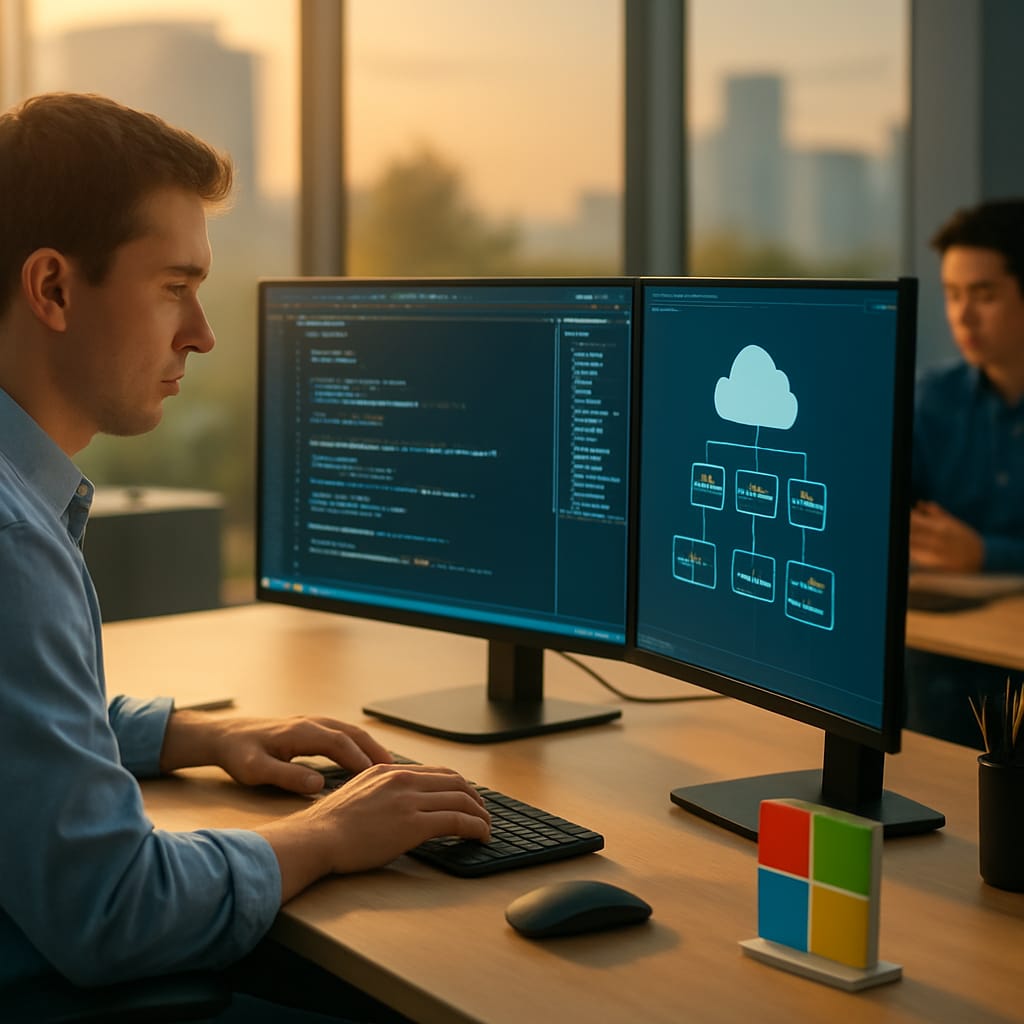
By 2026, Microsoft Development & .Net Services are redefining how Australian engineering teams operate in a remote-first world, with Azure, .NET 9+, and GitHub forming a unified delivery backbone across time zones. Remote and hybrid work now shape long-term technology strategy, forcing organisations to design platforms that are secure, observable, and repeatable from day one. Modern toolchains, including GitHub Copilot and Microsoft 365 Copilot, are embedded directly into developer workflows, enabling AI-powered custom .NET solutions that improve quality and speed without compromising governance. This shift is particularly important for enterprise application development, where regulatory compliance and consistent coding standards are non-negotiable. As distributed squads collaborate across shared repositories, automation, policy-as-code, and zero-trust defaults become the baseline rather than a future aspiration. Australian businesses that embrace this model can scale remote .NET development services while maintaining predictable release cadences. The result is a more resilient, adaptable engineering capability aligned to long-term digital agendas.
Underpinning this transformation is a decisive move towards cloud-based .Net applications hosted on Azure and deployed via containerised or serverless architectures. Teams are increasingly adopting scalable enterprise .NET architectures using Azure Kubernetes Service, Azure Functions, and managed data platforms to support critical workloads. These patterns not only improve elasticity and resilience but also simplify operations for distributed DevOps for Microsoft development teams that rely on consistent, automated pipelines. Platform engineering groups are codifying golden paths using Bicep or Terraform to define standardised landing zones, identity controls, and networking policies. Such foundations accelerate custom software solutions while keeping governance centralised and auditable. For organisations still running monolithic systems, modernizing legacy Microsoft applications has become a priority to remove friction from remote delivery. As this ecosystem matures, leaders gain clearer visibility into performance, cost, and security across their global engineering footprint. This clarity empowers better decision-making and continuous optimisation at scale.
Key trends shaping Microsoft development in Australia’s remote-first era
Several macro trends are steering how Australian organisations design and operate future-ready Microsoft cloud solutions in 2026. AI-assisted engineering is now mainstream, with GitHub Copilot and related tools providing structured guidance, refactoring suggestions, and security-aware code hints. These capabilities shorten onboarding times for distributed teams and help maintain alignment with shared standards and patterns. At the same time, observability and FinOps disciplines are being embedded into every stage of the lifecycle, using Azure Monitor, Application Insights, and enriched Copilot analytics to balance productivity with cost. Security remains paramount, with secure Azure-based enterprise apps using Entra ID, Conditional Access, and Defender for Cloud to enforce least-privilege controls on remote access. Organisations are also exploring cross-platform .NET MAUI development to deliver unified experiences across desktop and mobile while maintaining a single codebase. Collectively, these trends position Australian enterprises to innovate rapidly while maintaining tight operational control in a remote-first context.
- Standardised Azure landing zones and CI/CD pipelines for consistent, compliant deployments across remote teams.
- Deep integration of AI-assisted tooling, including Copilot, throughout coding, testing, and review workflows.
- Systematic modernisation of monolithic workloads into modular, cloud-native .NET services and functions.
- Comprehensive observability stacks, combining logs, metrics, and traces to support proactive incident response.
- Zero-trust security posture incorporating Conditional Access, just-in-time permissions, and continuous compliance checks.

To fully realise these benefits, Australian organisations are codifying their delivery models for Microsoft Development & .Net Services with clear architectural boundaries and automation-first principles. Baseline templates define approved patterns for APIs, event-driven integrations, and data platforms that remote engineers can instantiate through self-service portals. This approach supports secure, consistent environments while still enabling local autonomy for squads working on differentiated capabilities. As governance-as-code matures, policy-aware build and release pipelines enforce compliance automatically, reducing manual gatekeeping and rework. Organisations experimenting with autonomous pull request bots and AI-driven refactoring are discovering the importance of robust test coverage and well-structured repositories. These foundations ensure that automation enhances, rather than undermines, reliability and auditability. Over time, such practices support a sustainable shift towards future-ready operating models that are resilient to further disruption.
Australian enterprises that treat remote delivery as a core design constraint, rather than a temporary workaround, are the ones building durable, innovation-ready Microsoft platforms for the decade ahead.
Designing remote-ready Azure and .NET architectures for 2026 and beyond
Looking ahead, organisations that align technology strategy with remote-first practices will be best positioned to deploy future-ready Microsoft cloud solutions at scale. This means combining opinionated platform blueprints, automated guardrails, and strong engineering enablement to streamline everyday delivery. As generative AI agents begin to influence incident response, optimisation, and remediation, disciplined branching strategies and high-quality test suites will be essential to keep changes safe and observable. Forward-leaning teams are already experimenting with AI-enhanced pipelines that recommend cost optimisations, security hardening, and performance tuning for remote workloads. In this landscape, the next competitive advantage lies in how quickly organisations can adapt patterns without sacrificing governance. If your business is reassessing how it supports distributed engineers, now is the time to evaluate your .NET and Azure roadmap, identify gaps, and define a pragmatic transition path. Engage your architecture, security, and operations leaders to build a cohesive, remote-first Microsoft platform strategy that will carry you confidently into 2026 and beyond.