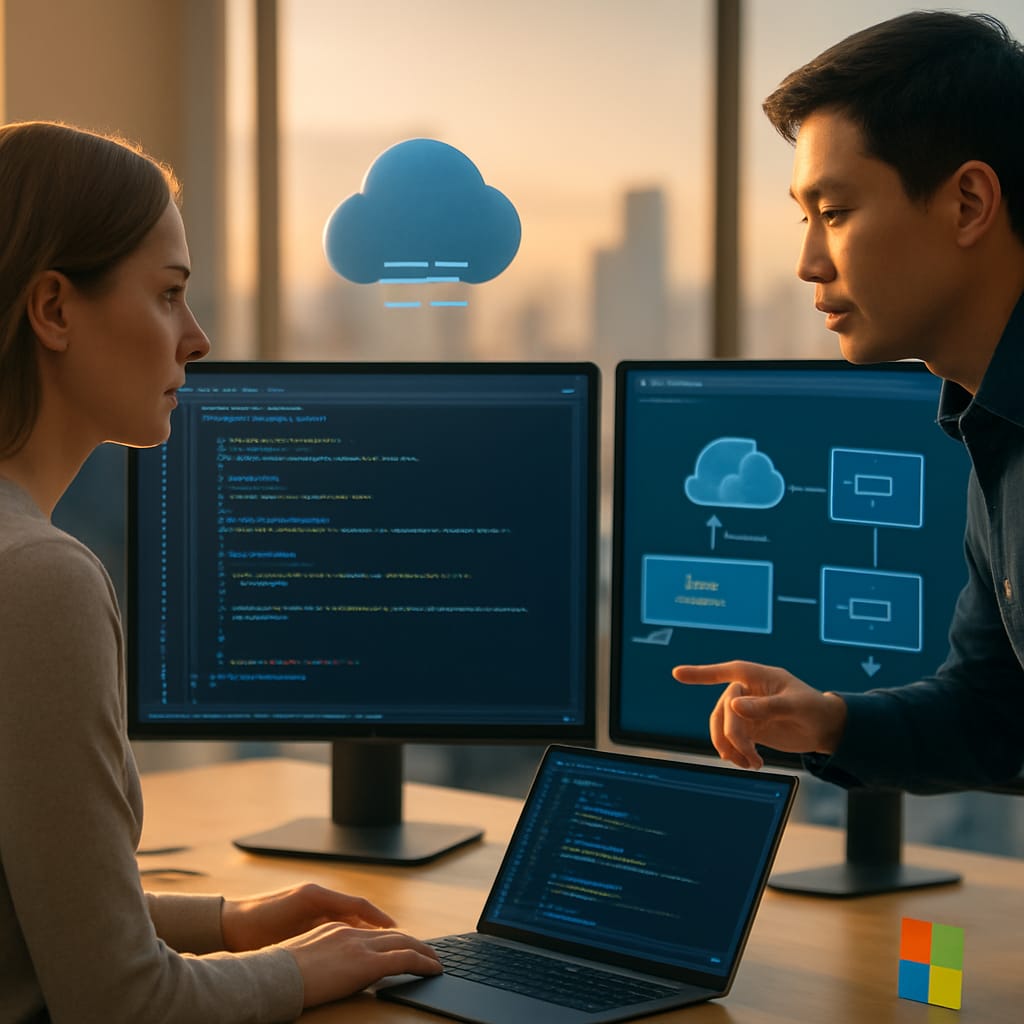
In 2026, Microsoft development collaboration is entering a new phase where cloud, AI, and integrated tooling radically improve how Australian teams build software. Development squads can now move from idea to production faster by combining GitHub, Azure, Visual Studio, and Microsoft 365 into a unified workflow that reduces handoffs and miscommunication. As these platforms converge, engineers gain consistent visibility across planning, coding, testing, and operations without constantly switching tools. This is especially powerful for distributed teams working across multiple time zones and complex regulatory environments. Automated insights, intelligent suggestions, and embedded security scanning are becoming standard, lifting baseline quality for every commit. When paired with robust governance and clear engineering practices, this toolchain helps organisations meet demanding reliability and compliance goals. The result is a more predictable, transparent software delivery lifecycle aligned to modern business expectations.
For Australian organisations, this evolving ecosystem supports both greenfield initiatives and the modernisation of legacy workloads into more flexible architectures. Teams can deliver custom software solutions that connect seamlessly with existing Microsoft 365 and Azure investments while still meeting strict data residency requirements. With integrated telemetry, engineering leaders can understand performance, usage patterns, and failure modes in near real time. Data from pipeline runs, production monitoring, and incident management flows back into planning, enabling continuous improvement. At the same time, standardised environments and reusable templates simplify onboarding for new developers. This consistent foundation also reduces shadow IT risks and duplication of effort across business units. By treating the Microsoft toolchain as a strategic platform rather than a set of standalone products, enterprises can better align technology delivery with long-term organisational priorities.
2026: The New Era of Microsoft Development Collaboration
In 2026, the new era of Microsoft development collaboration is defined by tightly integrated services that support the full software lifecycle. Microsoft Development & .Net Services play a central role in enabling Australian teams to coordinate planning, coding, code review, testing, and deployment within a single coherent environment. GitHub provides version control and pull request workflows, while Azure DevOps pipelines handle continuous integration and delivery across multiple environments. Visual Studio and Visual Studio Code connect directly into these services, giving engineers immediate feedback on build status, quality gates, and test coverage. Microsoft Teams acts as the communication hub, surfacing alerts, build results, and incident notifications where people already collaborate. This stack supports enterprise application development patterns, from monolith modernisation to highly distributed architectures. The combination empowers organisations to adopt more disciplined engineering practices without sacrificing speed or flexibility.
- Leverage GitHub pull requests, protected branches, and code owners to enforce collaborative .NET project workflows that improve code quality and resilience.
- Adopt DevOps for Microsoft developers with consistent CI/CD templates, automated testing, and environment promotion policies across all teams.
- Design secure Azure-based applications using identity-driven access, managed identities, and integrated secrets management as default controls.
- Implement scalable Microsoft cloud solutions by combining Azure Kubernetes Service, serverless functions, and managed databases with unified monitoring.
- Promote modern .NET development practices through coding standards, peer review guidelines, and training on new runtime features and tooling.

AI-first tooling is fundamental to this collaborative model, with GitHub Copilot, IntelliCode, and Azure OpenAI integrations embedded directly in the developer workflow. These capabilities assist with code generation, unit tests, infrastructure as code templates, and even documentation drafts, freeing engineers to focus on system design and complex edge cases. When applied carefully, they support AI-driven enterprise applications that combine predictive analytics, automation, and conversational interfaces. In parallel, security tooling such as GitHub Advanced Security and Defender for Cloud continuously scans repositories and environments for vulnerabilities and misconfigurations. Telemetry-driven insights help teams detect performance regressions and capacity issues long before they impact customers. This combination of intelligence and automation supports next-generation .NET microservices that are both resilient and cost-efficient. Australian organisations can thus innovate quickly while retaining strong operational discipline and governance controls.
In 2026, high-performing Australian engineering teams treat integrated Microsoft tooling, AI assistance, and cloud-native design as essential capabilities, not optional extras.
.NET, Cloud-Native Patterns, and Cross-Platform Delivery
.NET in 2026 is optimised for cloud-native, cross-platform, and container-based workloads that run efficiently on Azure and hybrid environments. Teams can reliably design cloud-based .Net applications that scale horizontally and integrate with managed services such as Azure SQL, Cosmos DB, and Service Bus. Improved performance characteristics and native AOT compilation reduce cold-start times and memory footprints, benefiting API-driven services and event-driven systems. Combined with support for cross-platform .NET development, organisations can target Windows, Linux, and mobile workloads using a consistent language and runtime. This flexibility lets architects choose the right deployment model for each component while retaining unified observability and operational practices.
Australian engineering leaders looking to fully harness this ecosystem should establish clear guidelines on architecture, tooling, and collaboration patterns. Formalising standards for branching strategies, code review expectations, test coverage thresholds, and environment promotion reduces friction between teams. When combined with centralised templates for pipelines and infrastructure, this enables repeatable delivery across diverse business domains. Investing in training around Kubernetes, serverless, and observability also helps teams operate complex distributed systems confidently. Finally, adopting structured roadmaps for skills uplift ensures developers stay current with emerging features and patterns. Organisations that align technology governance, talent development, and platform capabilities are best positioned to turn integrated Microsoft tooling into sustained competitive advantage.