2026 Trends: How AI is Transforming Software Development
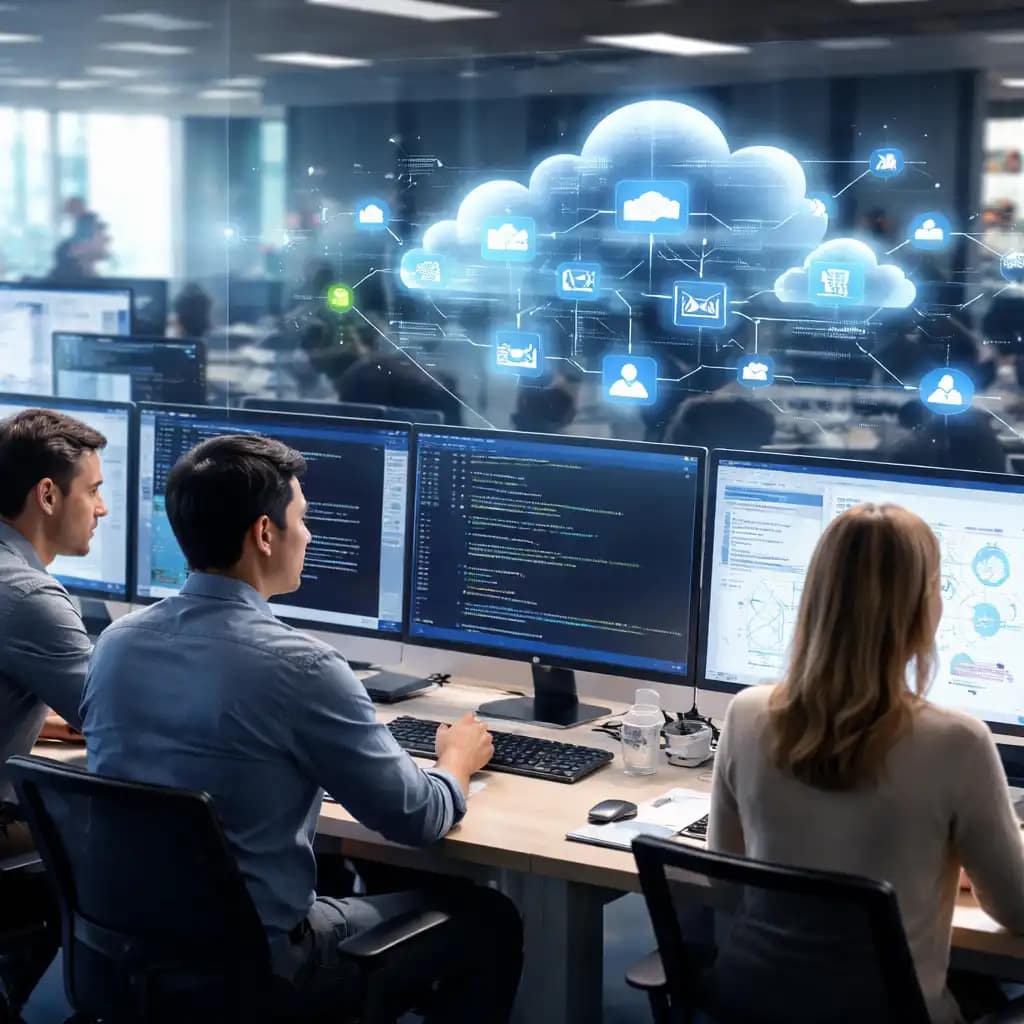
2026 Trends: How AI is Transforming Software Development captures a pivotal moment in the evolution of engineering practice, where artificial intelligence moves from experimental add‑on to foundational capability across the entire software delivery lifecycle. By 2026, AI Software Development is no longer limited to isolated teams or greenfield projects; instead, AI services, models and supporting platforms are deeply integrated into requirements management, solution architecture, implementation, testing, deployment and ongoing operations. In Australia, this shift is visible in both large enterprises and digital‑native scale‑ups, which are standardising development environments around AI‑enabled IDEs, intelligent pipelines and data‑driven observability stacks. As a result, release cadences are accelerating, defect rates are trending down, and systems are being architected with resilience, telemetry and continuous optimisation baked in from inception.
The state of AI in software development by 2026 reflects several converging advances: large language models with strong code understanding, domain‑specific models trained on telemetry and incident data, and robust platforms for integrating AI into existing toolchains. Organisations investing in intelligent software development now routinely combine static analysis, dynamic testing and AI‑based reasoning to detect design flaws and anti‑patterns before they propagate into production. This has profound implications for governance and compliance, as engineering leaders can define policies that are automatically enforced through AI‑augmented checks at each stage of the SDLC. In regulated sectors such as financial services, healthcare and critical infrastructure, risk teams are collaborating closely with platform engineering groups to curate training data, monitor model behaviour and ensure traceability of decisions made or recommended by AI systems.
Automated code generation and AI pair programming are particularly transformative. Developers work within environments where AI-powered coding tools analyse project context, coding standards and dependency graphs to propose implementations that align with architectural guidelines. Rather than manually writing boilerplate or repetitive integration logic, engineers focus on expressing intent at a higher level, often via structured prompts or natural‑language descriptions that drive generative AI for developers. This does not remove responsibility for correctness or security; instead, it changes the distribution of effort, with more time allocated to validating behaviour, hardening interfaces and stress‑testing failure modes. Australian teams are also updating role definitions and career frameworks so that senior engineers emphasise system design, threat modelling and performance engineering, while AI agents handle much of the mechanical coding.
Testing, QA and debugging practices are undergoing an equally significant transformation. AI‑based risk models ingest commit metadata, historical defect records, production incidents and user‑journey analytics to prioritise which tests must run for a given change set. This enables continuous integration pipelines to deliver rapid, high‑fidelity feedback without executing every test suite on every commit, a crucial optimisation for large microservice estates. When failures occur, AI‑driven correlation engines traverse logs, traces and metrics to narrow down likely root causes, suggesting concrete remediation steps or configuration adjustments. Over time, these systems learn from human decisions, improving their diagnostic accuracy and reducing mean time to recovery across fleets.
Architecture, performance and security optimisation are also being reshaped. Observability platforms that incorporate machine learning in devops now analyse runtime telemetry in near real time, detecting anomalies in latency distributions, error‑rate patterns and resource utilisation profiles. Instead of static autoscaling thresholds or manually tuned capacity plans, AI agents recommend or automatically apply scaling policies, placement rules and database index strategies that reflect actual workload characteristics. For Australian organisations managing multi‑cloud or hybrid environments, this capability underpins more predictable cost control and service‑level compliance. On the security front, models trained on vulnerability databases, exploit techniques and misconfiguration patterns continuously scan repositories, container images and infrastructure‑as‑code definitions, raising alerts when they detect exposures such as overly permissive roles, unpatched libraries or unencrypted data paths.
Low‑code and no‑code platforms are likewise being refactored around AI, enabling business users to assemble workflows, dashboards and approval chains through conversational interfaces. The platform translates these high‑level requirements into deployable artefacts, integrating with core systems and external APIs while observing governance rules. Professional developers remain essential, but their responsibilities shift towards creating reusable components, enforcing policy, and building custom AI applications that encapsulate domain logic or specialised models. This arrangement allows line‑of‑business teams to move quickly within well‑defined guardrails, reducing shadow IT and aligning local innovation with enterprise‑wide architectural standards.
Across all of these domains, cultural and skills changes are paramount. Engineering teams are investing in training around prompt design, model evaluation and data‑quality management, ensuring practitioners understand both the capabilities and the limitations of AI components. Organisations that frame AI as a collaborator rather than a competitor tend to see higher adoption and better outcomes, particularly when leaders communicate clearly about how performance metrics, quality expectations and career trajectories will evolve in an AI‑enabled environment. Formal communities of practice, internal guilds and AI champions embedded within product teams help demystify new tools, establish patterns and share hard‑won lessons from real projects.
Looking ahead, the future of AI programming is expected to be increasingly model‑centric and contract‑driven, with clear boundaries between human responsibilities and machine‑automated tasks. Toolchains will converge into next-gen AI development workflows where requirements are captured as executable specifications, test suites are generated and maintained automatically, and deployment configurations adapt dynamically to observed behaviour. In this context, automation in software engineering will no longer be confined to build and deployment stages; it will be woven through discovery, design, implementation and operations. For Australian enterprises, the strategic question is no longer whether to adopt AI, but how to sequence initiatives, govern risk and build the organisational muscle needed to leverage AI driven app development as a durable competitive advantage.
Within this broader shift, AI-assisted code review is emerging as a critical quality gate, augmenting human reviewers by flagging security smells, performance concerns and maintainability issues that might otherwise slip through. Over time, organisations that systematically integrate these capabilities into their pipelines can achieve higher baseline quality, fewer regressions and more reliable delivery at scale.
Automated Code Generation and AI Pair Programming in Practice
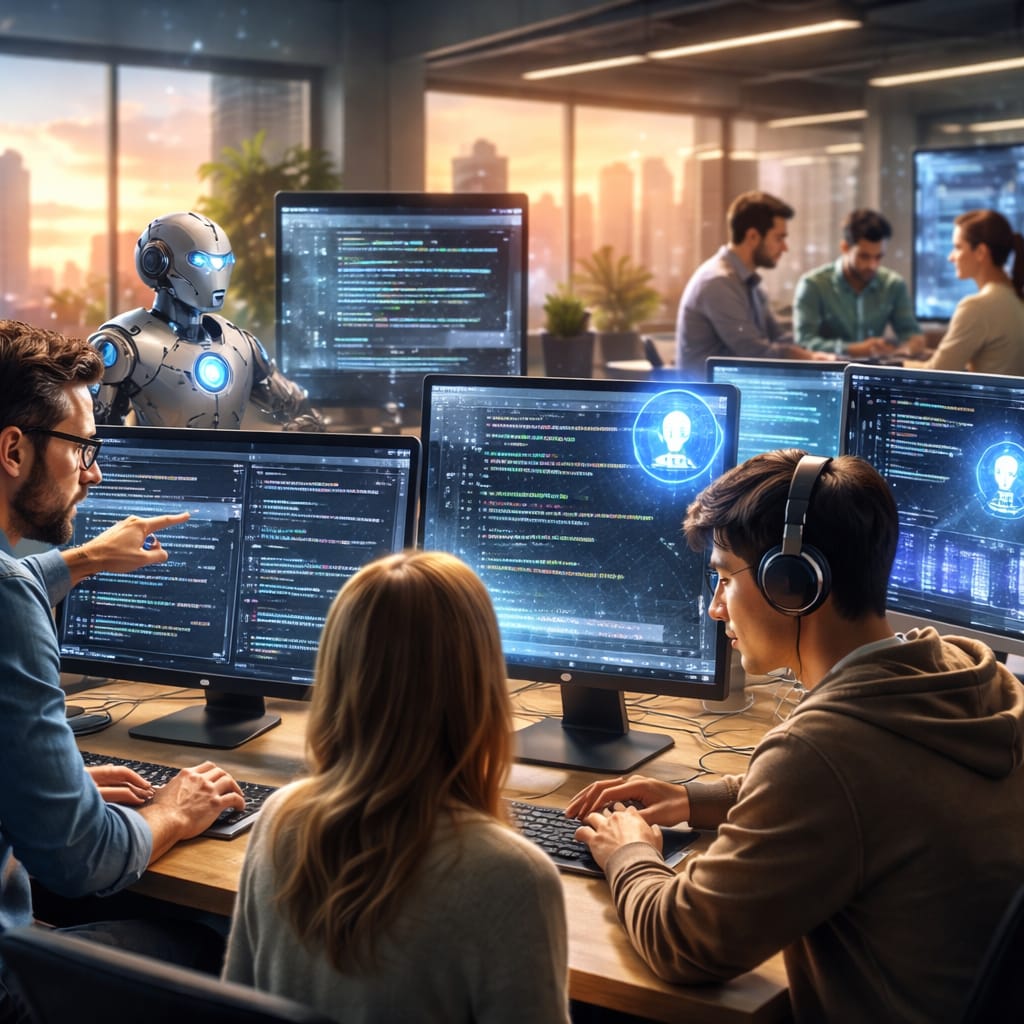
Automated Code Generation and AI Pair Programming in Practice describes how day‑to‑day development workflows are being reshaped as AI moves from optional plugin to core productivity engine within modern engineering environments. By 2026, most professional developers in Australia interact with AI agents during nearly every working session, whether they are designing new services, refactoring legacy modules or diagnosing production incidents. These agents operate within the IDE, the version‑control system and the continuous integration pipeline, providing context‑aware suggestions that align with established coding standards, architectural guidelines and organisational risk policies. Rather than treating AI as a simple autocomplete mechanism, teams are building deliberate collaboration patterns where engineers articulate intent in natural language or structured prompts, iteratively refine suggestions, and then apply domain knowledge to validate the resulting implementations.
One tangible impact of this shift is the reduction in time spent on repetitive and boilerplate tasks. Common patterns such as REST endpoint scaffolding, DTO generation, configuration wiring and test harness setup are offloaded to AI, allowing engineers to focus on complex business logic and cross‑cutting non‑functional requirements. When developers describe desired behaviours, the system synthesises candidate implementations, referencing existing modules, corporate libraries and standard interfaces so that new components fit seamlessly into the broader ecosystem. This capability is particularly powerful in organisations with large, loosely documented codebases, where AI can infer structure and conventions from prior commits even when formal documentation is incomplete or outdated. Over time, this leads to more consistent designs, fewer integration surprises and improved maintainability across product lines.
Pair‑programming with AI also enhances onboarding and knowledge transfer. New engineers joining an Australian enterprise can rely on AI co‑developers to explain unfamiliar idioms, highlight relevant internal frameworks and suggest safe ways to extend existing services. When they encounter complex sections of code, they can request structured explanations, potential refactoring strategies or alternative designs that respect performance and reliability constraints. This reduces ramp‑up time and lightens the mentoring burden on senior staff, who can then invest their efforts in high‑leverage architectural decisions, threat modelling and performance optimisation. In environments where teams are distributed across time zones, AI agents provide a stable, always‑available source of contextual assistance that complements, rather than replaces, human collaboration.
Governance remains central to realising value from these capabilities without amplifying risk. Leading organisations define policies that specify when AI‑generated code is acceptable, which licences are permitted, and how provenance must be tracked. Tooling is configured to log AI contributions, associate them with specific commits, and route high‑risk changes through additional scrutiny. In regulated sectors, compliance teams often require that security‑sensitive modules undergo manual review regardless of AI involvement, ensuring accountability remains clearly with human engineers. These controls extend to data used to fine‑tune models, with strict segregation between production datasets that may contain personal or confidential information and synthetic or anonymised training corpora. By treating AI systems as powerful but fallible tools, organisations can harness their strengths while maintaining rigorous standards around security, privacy and legal exposure.
From a process perspective, AI‑enabled pair programming encourages a more iterative, exploratory style of development. Engineers can quickly generate multiple candidate implementations, run targeted tests and performance benchmarks, and then converge on the most suitable design based on evidence rather than intuition alone. This experimentation is supported by integrated toolchains where feature branches, test environments and observability instrumentation are provisioned automatically, allowing rapid evaluation cycles. The outcome is a development culture that favours data‑informed decisions, continuous learning and proactive refactoring, with AI acting as both accelerator and quality amplifier. For Australian organisations operating in competitive markets, this combination of speed and robustness directly supports faster time‑to‑market and improved user satisfaction.
- AI‑augmented IDEs that provide contextual code suggestions, refactoring options and documentation links
- Continuous integration pipelines that use predictive models to prioritise and select test suites
- Security scanners powered by AI that detect vulnerabilities in code, dependencies and infrastructure‑as‑code
- Low‑code platforms infused with AI to translate natural‑language requirements into executable workflows
- Observability stacks that leverage AI to detect anomalies, optimise resource usage and guide performance tuning
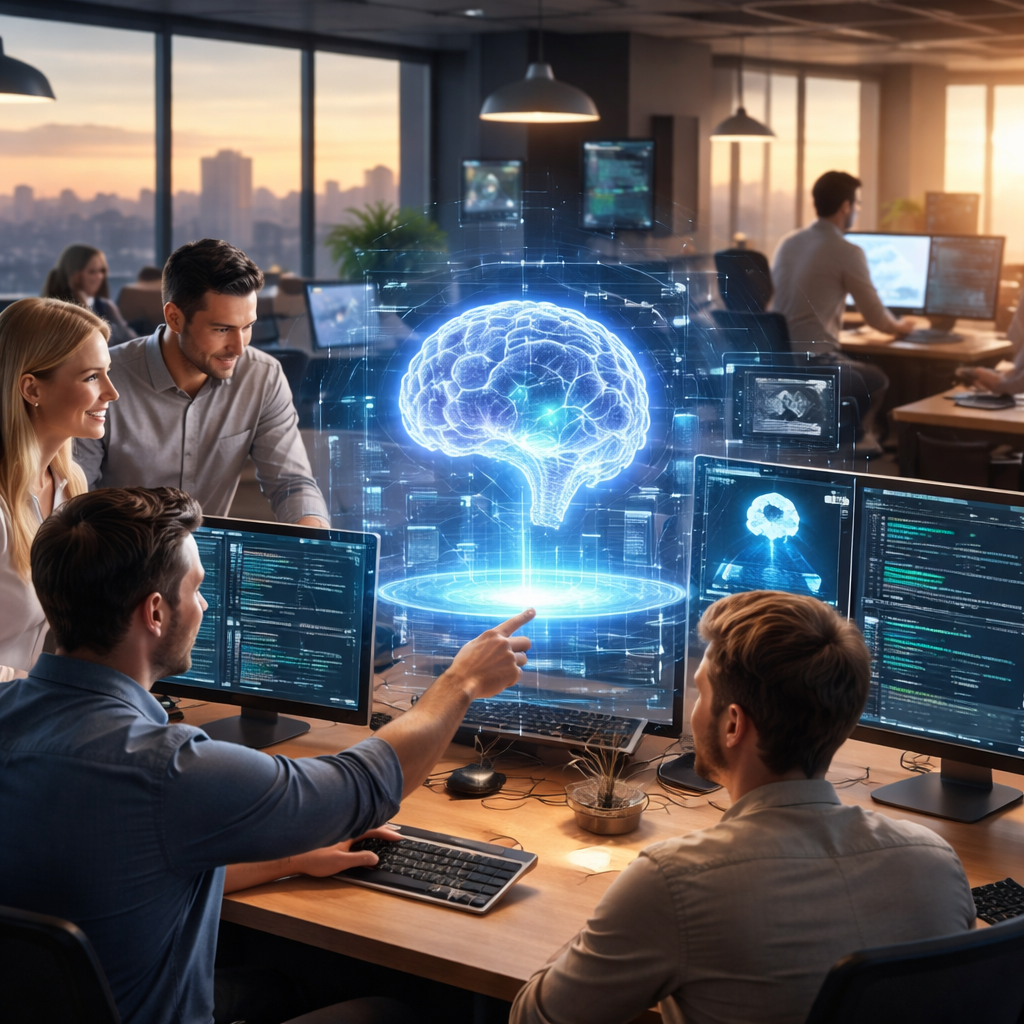
Within modern software delivery organisations, testing, quality assurance and debugging are increasingly orchestrated through AI‑centric workflows that complement traditional engineering discipline. By aggregating data from version control systems, issue trackers, test runs and production telemetry, AI engines build predictive models that assess the likelihood of defects at the level of individual files, services or user journeys. These models then drive dynamic test selection, ensuring that the most risk‑relevant scenarios are exercised as early as possible in the pipeline. Over time, feedback from real defects, false positives and remediation actions is fed back into the models, progressively improving their precision and recall. This creates a virtuous cycle where the effort invested in resolving incidents directly contributes to more accurate future risk assessments and test prioritisation.
Legacy systems, often critical to Australian enterprises, benefit substantially from these capabilities. When documentation is incomplete or obsolete, AI tools can mine execution traces, database schemas and log structures to infer implicit contracts between components. From these inferred models, they generate candidate unit tests, integration scenarios and regression suites that capture actual, as‑is behaviour. Engineers can then refine and extend these tests to define the desired future behaviour, using AI support to identify edge cases and failure modes that might otherwise be overlooked. During incident response, AI‑powered root‑cause analysis tools correlate symptom patterns with historical incidents and known failure signatures, enabling teams to triage issues more precisely and reduce time‑to‑detect and time‑to‑resolve. As these systems mature, they transition from reactive diagnostic aids to proactive monitors that anticipate issues before they impact end users.
Security and reliability are further strengthened when AI‑based testing is combined with formal verification, property‑based testing and chaos engineering. In safety‑critical or highly regulated domains, engineers specify invariants and safety properties that must always hold, regardless of runtime conditions. AI tools assist by generating test cases that stress these properties under extreme inputs, concurrent workloads or partial infrastructure failures. Chaos experiments, orchestrated by policy, inject controlled disruptions such as node failures, latency spikes or dependency unavailability, while AI systems observe the results and identify weaknesses in fallback logic, circuit breakers or retry strategies. This holistic approach ensures that software is not only functionally correct but also resilient under unpredictable real‑world conditions.
As these practices become mainstream, the boundary between development and operations continues to blur. Teams adopt shared dashboards, common SLOs and incident post‑mortem frameworks where AI generates initial timelines, impact assessments and candidate remediation plans. Human engineers validate, correct and enrich these artefacts, teaching the system to better support future events. In this environment, AI driven capabilities are not positioned as replacements for engineering judgement but as force multipliers that elevate the baseline quality, reliability and responsiveness of digital services.
By 2026, AI has evolved from a peripheral assistant into a core engineering capability, enabling Australian software teams to deliver more reliable, secure and performant systems while maintaining rigorous standards of governance and accountability.
Preparing for AI‑Driven Software Engineering in Australia
Preparing for AI‑Driven Software Engineering in Australia requires a deliberate blend of technology investment, operating‑model evolution and cultural change, rather than ad‑hoc experimentation with isolated tools. Organisations aiming to extract strategic value from AI‑enabled development must first establish robust data foundations, ensuring that source code, build artefacts, test results, telemetry and incident reports are captured, catalogued and accessible in a governed manner. These datasets underpin the training and fine‑tuning of models that support use cases ranging from AI-powered coding tools to advanced anomaly detection in production. Without high‑quality, well‑curated data, AI initiatives risk producing unreliable recommendations that erode trust and adoption among engineers.
From a technology perspective, platform teams should architect environments where AI services are treated as first‑class components of the SDLC. This includes standardised interfaces for invoking models, consistent authentication and authorisation patterns, and monitoring frameworks that track both technical performance and behavioural metrics such as suggestion acceptance rates or false‑positive rates in security scanning. By exposing these capabilities through internal platforms, organisations can support diverse product teams while maintaining centralised governance and compliance. Over time, this approach supports the emergence of next-gen AI development workflows, where human and machine contributions are orchestrated through policy‑driven pipelines rather than ad‑hoc integrations.
Operating‑model changes are equally significant. Many Australian enterprises are embedding AI specialists within cross‑functional product teams, tasking them with identifying high‑leverage opportunities, evaluating new tools and ensuring that responsible‑AI principles are consistently applied. These specialists collaborate with software engineers, SREs, security practitioners and product owners to design solutions that respect privacy, fairness and transparency requirements. For example, when introducing AI‑based code suggestion or risk scoring, they help define appropriate guardrails, such as requiring human review for certain classes of changes or providing explanations for security‑critical recommendations. This integrated approach avoids the pitfalls of centralised AI teams operating in isolation from day‑to‑day engineering reality.
Skills development must be planned and sustained. Engineers need fluency in core concepts such as model capabilities and limitations, prompt engineering, evaluation methodologies and data stewardship. Training programs, internal workshops and hands‑on labs help teams experiment safely with new tools and frameworks, while structured guidelines capture best practices as they emerge. Over time, this shared knowledge base supports consistent, high‑quality use of AI across business units. It also enables developers to move beyond superficial usage towards deeper integration patterns, such as combining AI‑generated code with domain‑driven design, or using AI insights to drive refactoring and modernisation initiatives for legacy platforms.
Strategically, leaders should prioritise use cases that demonstrate clear value while minimising risk. Common starting points include enhancing test coverage for fragile systems, augmenting observability with automated anomaly detection, and introducing AI assistants that help engineers navigate large codebases. As confidence grows, organisations can extend into more ambitious areas such as autonomous performance tuning, closed‑loop remediation for known failure patterns, and domain‑specific assistants embedded within business applications. Throughout this journey, transparent communication with staff is critical, especially regarding how AI will influence performance expectations, metrics and career opportunities. When teams see AI as a tool that enhances rather than threatens their professional practice, adoption is both faster and more sustainable.
In the broader ecosystem, Australian organisations that actively participate in open‑source communities, standards bodies and industry collaborations around AI in engineering will be better positioned to shape and benefit from global best practice. Sharing lessons learned, contributing to reference implementations and engaging with regulators on emerging requirements all help ensure that innovation proceeds in a way that supports long‑term resilience and trust. Ultimately, the organisations that succeed will be those that balance ambition with responsibility, combining disciplined engineering with the transformative potential of AI to create software systems that are not only more capable, but also more secure, reliable and aligned with societal expectations.