
AI in Software Development: The Future of Intelligent Code Generation in 2026
Understanding AI in Software Development in 2026
AI in software development has shifted from an experimental add-on to a fundamental engineering capability in 2026. Across Australia and globally, most professional teams now rely on AI Software Development practices to accelerate delivery while maintaining rigour. Modern platforms analyse natural language requirements, architectural diagrams, and legacy repositories to generate production-ready code with impressive contextual awareness. Developers increasingly orchestrate multiple AI tools for developers inside their IDEs and CI/CD pipelines, blending suggestions from different providers. This ecosystem is reshaping hiring profiles, with engineers expected to prompt, review, and govern AI output as a core skill. Organisations also engage partners to build custom AI applications that embed policy, security controls, and internal libraries directly into the coding experience. As a result, teams can move faster without sacrificing maintainability or compliance in regulated environments.
Central to this shift is the rise of context-aware assistants that understand entire projects rather than isolated files. By indexing repositories, tickets, and documentation, these systems can propose refactors that align with existing patterns and frameworks. Teams experimenting with AI-driven code generation report reductions in boilerplate work and fewer defects introduced during repetitive coding tasks. At the same time, engineers remain accountable for final decisions, using static analysis and security scanning to validate each change. This human-in-the-loop model is proving especially valuable for mission-critical sectors such as finance, health, and government. In these domains, the emphasis is on evidence-based productivity gains rather than blind reliance on automation. Over time, the most successful organisations will be those that combine disciplined engineering culture with systematic use of intelligent automation.
Another defining feature of 2026 is the maturation of intelligent software development across the entire stack. AI systems now handle not only backend services but also frontend components, infrastructure-as-code, and data pipelines. This breadth enables a consistent development experience in polyglot environments where Python, Java, TypeScript, Go, and Rust coexist. Engineering teams increasingly treat their AI agents as virtual colleagues, asking them to draft design docs, suggest APIs, and anticipate integration risks. When deployed carefully, these assistants help enforce internal standards, making large distributed teams feel more cohesive. For Australian organisations navigating skills shortages and complex regulatory requirements, this combination of speed and control can be strategically decisive. It allows them to modernise legacy systems while still meeting local data sovereignty and privacy expectations.
Key Capabilities of Intelligent Code Generation
Modern intelligent software development platforms deliver several capabilities that materially change day-to-day engineering work. Context-aware completion allows models to infer developer intent from comments, docstrings, and broader repository structure. This means a single well-written description can produce an initial implementation plus candidate unit tests. Teams leveraging automating software testing with AI often report substantial gains in coverage without lengthening sprints. Assistants can also suggest regression-safe refactors, highlight dead code, and propose performance improvements in critical paths. When integrated with observability data, some agents now recommend specific optimisations based on live traffic characteristics. Over time, these patterns are turning AI into a practical co-pilot across the full lifecycle, from design to deployment.
- Context-aware suggestions that align with existing architectures and code conventions.
- Automated unit, integration, and property-based tests linked to real-world usage patterns.
- Cross-language support enabling cohesive workflows across backend, frontend, and infrastructure code.
- Refactoring recommendations grounded in static analysis and performance telemetry.
- Secure coding patterns embedded directly into generated snippets for sensitive industries.
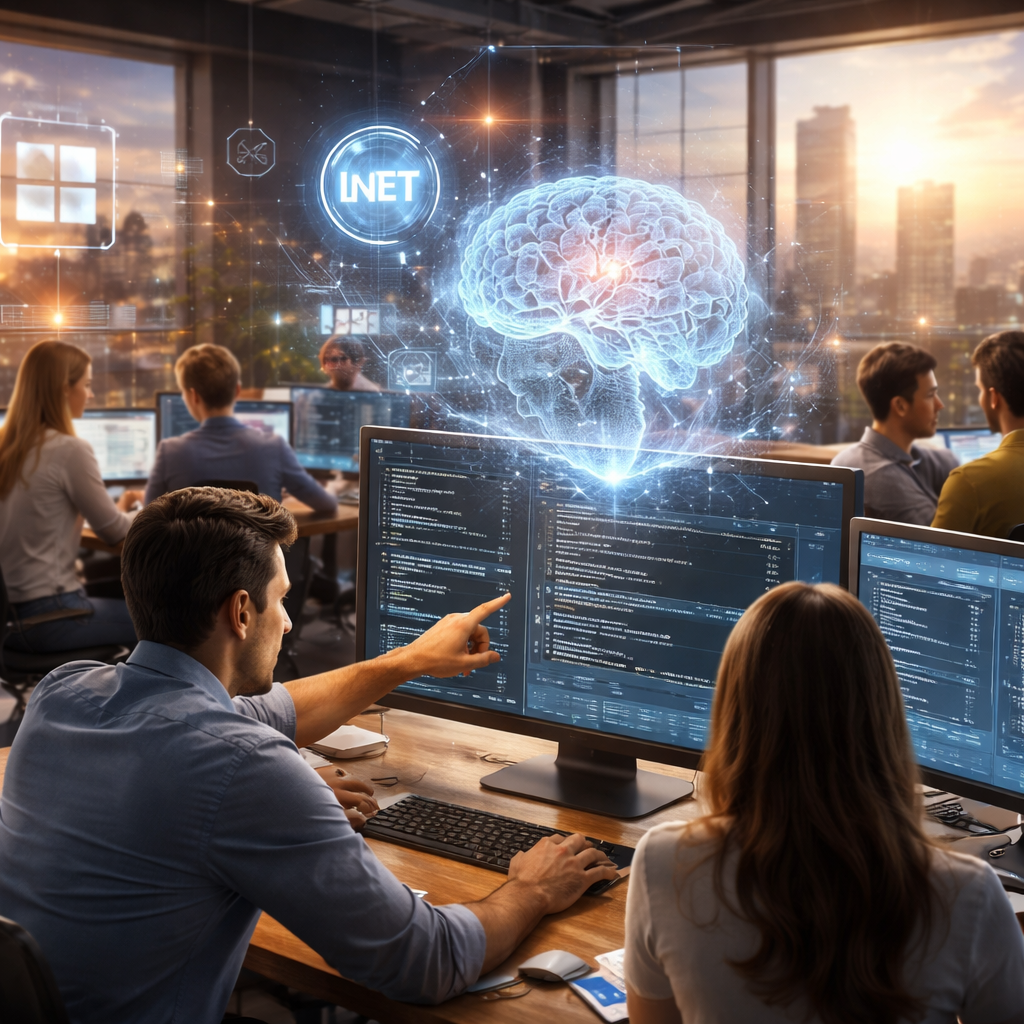
Successful adoption of these tools however requires more than installing a plug-in. Leaders are formalising AI-powered development workflows that define where automation adds value and where human judgement is mandatory. Policy frameworks describe acceptable use, data handling rules, and review expectations for generated code. Teams also invest in prompt engineering skills so developers can articulate intent clearly and reduce iteration cycles. In many cases, architects curate example prompts and responses as internal playbooks that reflect preferred patterns. As familiarity grows, engineers start to explore more advanced scenarios such as using machine learning in coding to tailor assistants to proprietary tech stacks. These foundations create a sustainable environment where productivity gains do not erode security or reliability.
The most effective engineering organisations in 2026 treat AI as a disciplined collaborator, combining automated suggestions with strong review practices, observability, and testing to deliver resilient software at scale.
The Future of Intelligent Code Generation and Governance
Looking ahead, the future of AI programming will be defined as much by governance as by raw model capability. Enterprises are already grappling with licensing questions, training data provenance, and sector-specific compliance requirements. This is driving interest in ethical AI in development, where teams audit prompts, outputs, and decision logs for transparency. In parallel, risk functions are engaging more deeply with engineering leaders to understand how generative systems operate. Australian organisations in particular must balance innovation with alignment to local privacy laws and industry guidelines. Clear documentation, architecture diagrams, and traceable pipelines will be essential to maintain stakeholder confidence. When done well, these practices ensure AI remains an enabler rather than a source of uncontrolled technical debt or regulatory exposure.
For organisations planning their next three years, the priority is to define an actionable roadmap for AI in software development rather than waiting for perfect maturity. This includes piloting assistants on non-critical services, measuring impact, and scaling patterns that demonstrably work. It is also an opportunity to revisit training programs, ensuring engineers understand both capabilities and limitations of generative tooling. As platforms continue to advance, teams that have laid these foundations will be best positioned to harness intelligent code generation safely. To explore how your organisation can build a robust strategy around intelligent software development, speak with a specialist partner and begin a focused pilot that targets a single value stream today.