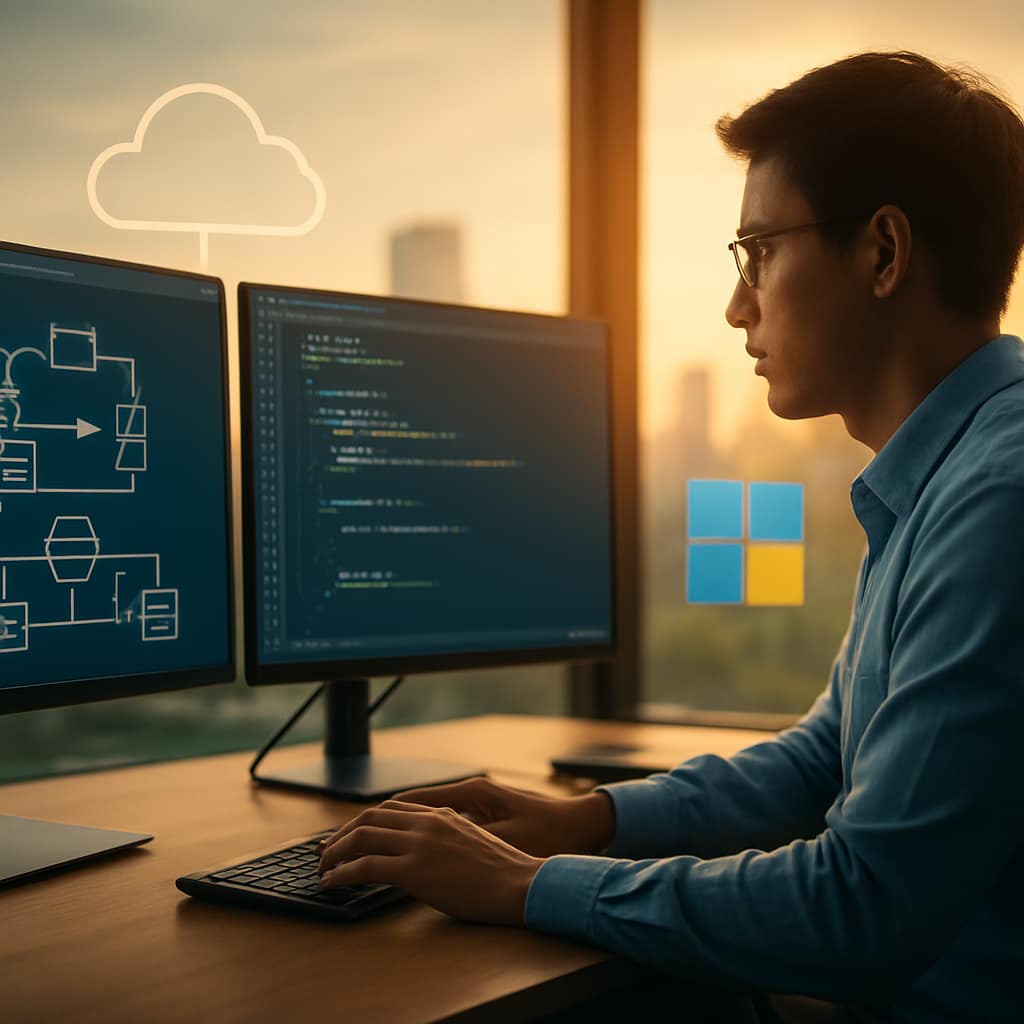
Emerging Technologies in Microsoft Development for 2026 are reshaping how Australian organisations design, build and operate critical software systems. As .NET 9, C# 13 and Azure AI mature, teams are moving rapidly towards AI-first, cloud-native and cross-platform engineering models that emphasise automation, resilience and intelligent user experiences. By aligning projects with Microsoft Development & .Net Services, enterprises can consolidate toolchains, accelerate delivery and maintain compliance with local data sovereignty requirements. This shift is especially important for regulated industries such as finance, healthcare and public sector, where latency, reliability and auditability directly affect service outcomes. In this context, technical leaders are rethinking legacy platforms, integration strategies and governance models to support continuous delivery and continuous security while still controlling risk and spend.
Across Australia, engineering teams are increasingly prioritising custom software solutions that take full advantage of Azure-native capabilities, rather than simply lifting and shifting monolithic applications into the cloud. The emphasis is on decomposing systems into scalable enterprise .NET microservices, enabling independent deployment, targeted performance optimisation and fine-grained security controls. This architectural evolution is supported by improved ARM64 performance and native AOT in .NET 9, which deliver faster cold starts and lower resource usage for containerised workloads. In parallel, GitHub Copilot and Azure AI are being embedded directly into development workflows, enabling AI-assisted code generation, refactoring and documentation that reduce cognitive load on engineers. As a result, organisations can deliver features more frequently, while maintaining rigorous testing and observability standards.
Emerging Technologies in Microsoft Development for 2026
The core of Emerging Technologies in Microsoft Development for 2026 is the convergence of language, framework and platform advances into a cohesive engineering ecosystem. C# 13 introduces features that simplify concurrency and pattern matching, helping developers write clearer, safer code that better reflects complex business rules. On the front end, cross-platform .NET MAUI apps and Blazor-based experiences enable shared component libraries across web, desktop and mobile, reducing duplication and easing long-term maintenance. These capabilities are complemented by modern Microsoft cloud architecture patterns that integrate APIs, messaging, data and AI services using well-defined contracts and automated deployment pipelines. For many enterprises, this combination unlocks practical next-generation .NET development trends such as event-driven integration, zero-trust security and continuous compliance monitoring. Ultimately, the focus is on building systems that are easier to evolve, observe and secure over multi-year lifecycles.
- Adopt cloud-based .Net applications to leverage elastic scalability and regional Azure data centres.
- Modernise legacy workloads using future-ready .NET modernization strategies and incremental refactoring.
- Implement secure Azure-based enterprise solutions with zero-trust principles and continuous monitoring.
- Incorporate AI-driven custom software development patterns for intelligent automation and insights.
- Extend capability through low-code Microsoft business applications for rapid business-led innovation.

AI-first engineering is becoming standard as Azure AI Foundry and orchestration frameworks make it easier to design agents that handle domain-specific workflows and continuous operations. By embedding governed AI components into enterprise application development, organisations can automate data enrichment, anomaly detection and knowledge retrieval while preserving strict access controls. These agents integrate naturally with existing systems via APIs, event streams and Microsoft 365, providing contextual insight at the point of decision. At the same time, robust telemetry and observability pipelines ensure that AI behaviour is auditable and explainable, which is critical for highly regulated Australian environments. This combination of automation, governance and integration is rapidly redefining expectations for responsiveness, reliability and cost efficiency in enterprise platforms.
By 2026, the organisations that lead in Microsoft development will be those that treat AI, cloud-native engineering and cross-platform delivery as foundational capabilities, not optional enhancements.
Preparing for Emerging Technologies in Microsoft Development for 2026
To prepare for Emerging Technologies in Microsoft Development for 2026, Australian organisations should begin with a structured assessment of their current portfolio, focusing on technical debt, security posture and readiness for incremental cloud migration. Prioritising workloads for refactoring into modular services and APIs lays the groundwork for sophisticated analytics, automation and integration scenarios. Teams should invest in training across .NET 9, C# 13, Azure AI and Microsoft Fabric, ensuring developers, architects and operations staff share a common understanding of platform capabilities. Establishing clear reference architectures, coding standards and governance models will help maintain consistency as multiple squads deliver features in parallel. Finally, partnering with experienced Microsoft specialists can de-risk complex transitions and accelerate adoption of AI-enabled engineering practices across the organisation.