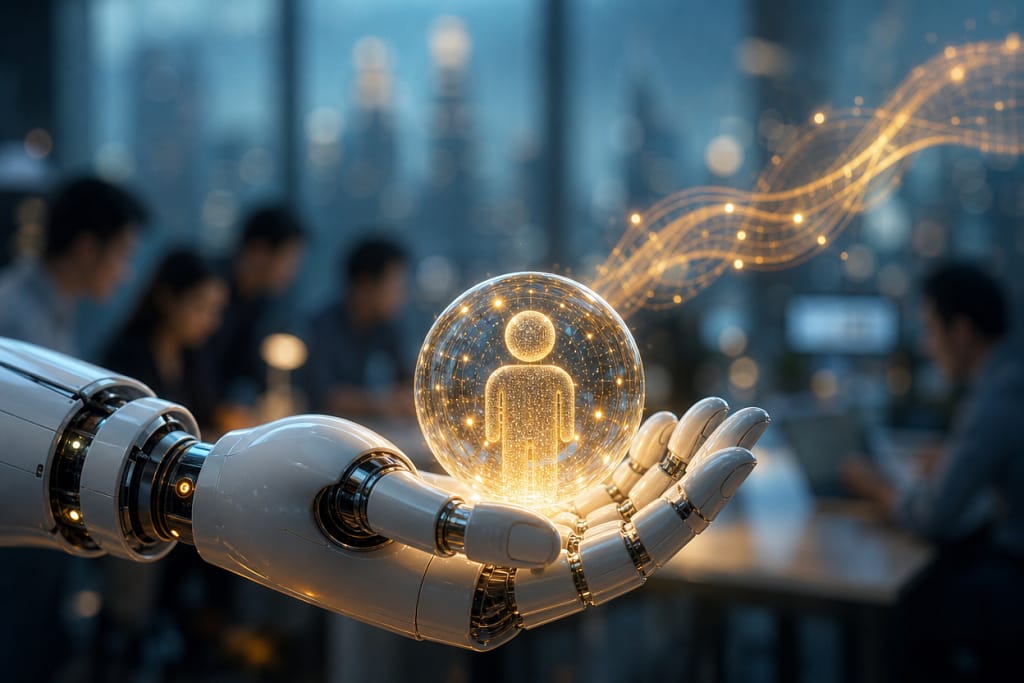
Exploring the Future of AI in Microsoft Development for 2026 is essential for Australian organisations planning their next wave of digital transformation. Over the coming years, AI will become a foundational capability across the entire Microsoft stack, from development tools to runtime environments. Developers will rely on contextual assistance, intelligent refactoring, and automated testing to deliver robust solutions faster. This shift will particularly benefit teams delivering custom software solutions that must adapt rapidly to changing business needs and regulatory expectations. By combining AI with strong engineering discipline, organisations can improve code quality while reducing operational risk. In parallel, advances in model hosting and orchestration will make it easier to embed AI into existing systems without disruptive rewrites. For Australian enterprises, the real opportunity lies in treating AI as a core engineering competency rather than a niche experiment.
Within the Microsoft ecosystem, AI-driven .NET development will change how architects design, deploy, and operate business-critical systems. Tooling will increasingly analyse entire solutions, recommending patterns that enhance resilience, security, and performance. Teams focused on enterprise application development will gain automated insights into dependency risks, performance bottlenecks, and compliance gaps. As this capability matures, AI will support refactoring into modular architectures that are simpler to test and evolve. This will be particularly valuable for organisations modernizing legacy Microsoft platforms that currently limit agility. AI-guided migration paths, code suggestions, and configuration baselines will reduce both cost and uncertainty. Over time, these capabilities will help standardise best practice across distributed development teams, including offshore and partner contributors.
The Evolution of AI-Enhanced Architectures in Microsoft Development
By 2026, AI will be tightly integrated into design-time and run-time aspects of cloud-based .Net applications across Australian industries. Solution architects will use AI to model capacity needs, predict scaling behaviours, and recommend optimal service compositions on Azure. Operational teams will benefit from AI-enhanced application lifecycle tooling that correlates telemetry, feature flags, and deployment history to pinpoint issues quickly. When combined with DevSecOps practices, these insights will help reduce mean time to recovery and improve overall reliability. For developers, intelligent code completion will be complemented by automated test generation, security rule enforcement, and performance tuning suggestions. This holistic AI support will enable the build of scalable Azure-based applications that respond dynamically to workload and user behaviour. As a result, enterprises will move closer to self-healing, self-optimising applications that support continuous delivery at scale.
- Use AI-assisted design reviews to validate architecture decisions against performance, security, and compliance baselines.
- Adopt GitHub Copilot and related tools as standard for code generation, documentation, and unit testing support.
- Leverage machine learning in .NET for predictive monitoring, anomaly detection, and intelligent routing in production workloads.
- Plan migration roadmaps that progressively unlock next-generation .NET services while protecting existing investments.
- Establish governance frameworks to ensure responsible use of AI models, datasets, and deployment pipelines on Azure.

Australian organisations pursuing intelligent enterprise software will look to Azure AI, vector search, and orchestration frameworks to operationalise models reliably. Strong data engineering practices will be required to manage lineage, quality, and consent across distributed data sources. Teams will also need to design guardrails that align with local privacy, security, and sector-specific obligations. As regulatory expectations evolve, integrated auditing and policy evaluation will become mandatory design elements rather than optional extras. Service portfolios such as Microsoft Development & .Net Services will help organisations accelerate adoption while meeting governance requirements. These partners can provide reference architectures, reusable templates, and patterns tuned to Australian conditions. Over time, this combination of technical and regulatory capability will differentiate organisations that treat AI as a strategic platform.
By 2026, the most competitive Australian enterprises will be those that embed AI across their development lifecycle, treating it as a core engineering discipline rather than an isolated innovation project.
Preparing Australian Teams for AI-First Microsoft Solutions
Preparing for future-ready Microsoft solutions will demand targeted upskilling across development, architecture, and operations roles. Engineers will need working knowledge of prompt design, evaluation metrics, and deployment patterns for models in production. Cloud engineers will focus on securing endpoints, managing cost-efficient GPU workloads, and integrating AI components with existing observability tooling. Business stakeholders will need enough fluency to prioritise use cases, assess risk, and measure value generation. Organisations should pilot AI-driven use cases that unify data, workflows, and decision-making across departments. This might include AI-driven decision support for field services, or cloud-based optimisation engines for logistics and supply chains. Ultimately, the goal is to create a portfolio of future-ready initiatives that scale into full next-generation .NET services over time, rather than isolated proofs of concept.