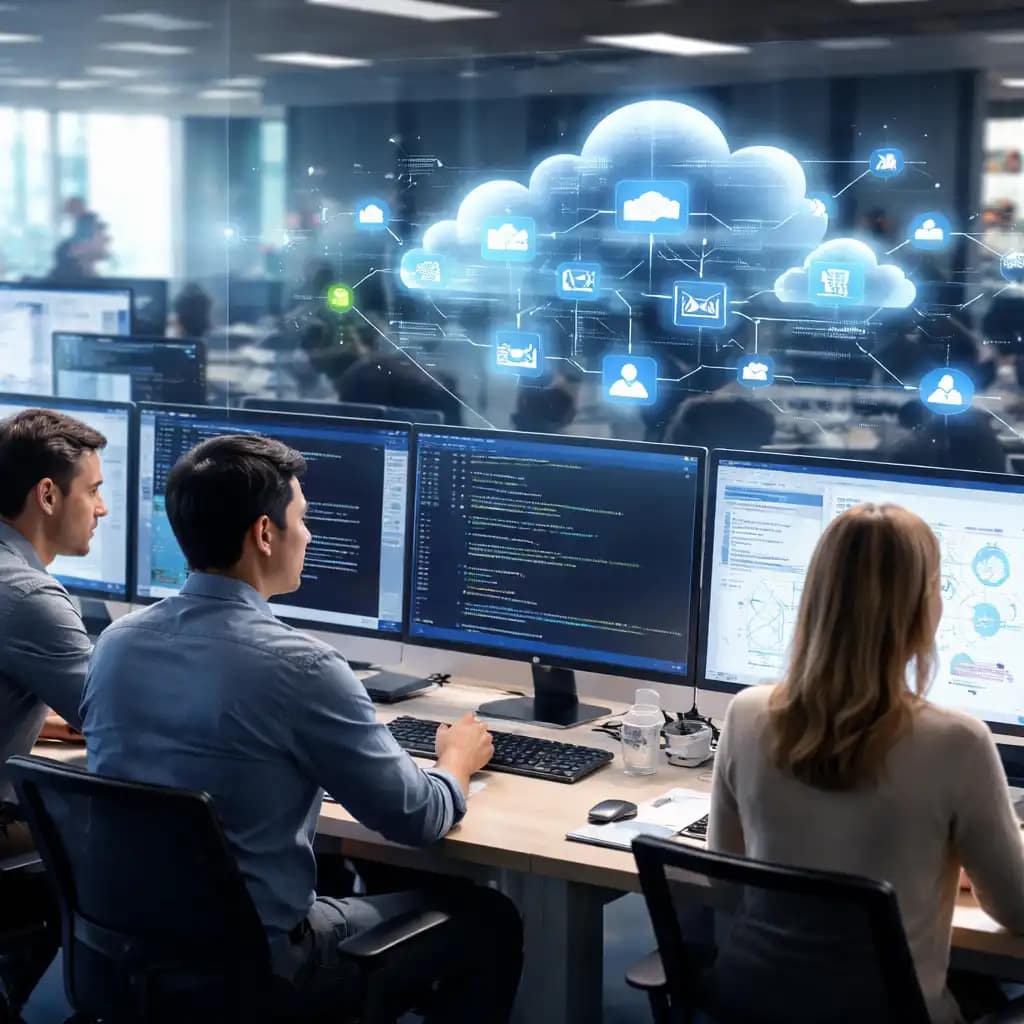
The Future of Software Development: AI-Driven Trends in 2026
The Future of Software Development in 2026
The future of future of AI coding is rapidly reshaping how Australian teams build and maintain software systems. By 2026, AI will be deeply integrated into day-to-day engineering workflows, from planning and coding through to release and ongoing optimisation. Early adopters are already using custom AI applications to automate repetitive work, enforce standards, and surface insights that human reviewers might miss. As these capabilities mature, they will fundamentally alter skill requirements, team structures, and delivery timelines. Rather than replacing engineers, AI will amplify their productivity and reduce cognitive load on low‑value tasks. Organisations that experiment now will be better positioned to set governance, security, and compliance patterns before scale introduces unnecessary risk. This shift will reward teams that combine strong engineering discipline with strategic adoption of AI capabilities.
AI-powered automation in coding is emerging as the backbone of modern engineering practices. Developers are increasingly relying on AI-powered development tools to generate boilerplate code, refactor legacy modules, and suggest performance improvements in real time. These systems learn from vast codebases to recommend patterns that align with best practice and internal guidelines. When combined with robust code review, this approach can reduce defect rates while accelerating feature delivery. In Australia’s competitive digital economy, the teams that embed machine learning in software engineering workflows will ship secure, reliable software faster than their peers. However, success depends on clear guardrails, including version control policies, traceability of AI-generated changes, and continuous training of models on trusted, organisation-specific repositories.
Intelligent DevOps and operations will be central to running resilient platforms at scale by 2026. AI automation in DevOps is already helping site reliability teams analyse telemetry, detect anomalies, and predict incidents before they affect customers. Instead of manually trawling logs, engineers can receive prioritised alerts enriched with likely root causes and recommended remediation steps. Over time, recurrent issues can be addressed through self-healing runbooks orchestrated by AI agents. This approach frees specialists to focus on architecture, resilience testing, and capacity planning. For Australian organisations operating across multiple regions and clouds, intelligent software development practices in operations will be essential to meeting uptime SLAs and regulatory expectations. The most advanced teams will treat these AI systems as collaborators, continuously validating outputs and refining feedback loops.
AI-Enhanced Testing, Quality, and User Experience
Testing and quality assurance are being transformed by AI Software Development across the entire lifecycle. Machine learning models can derive high‑value test cases from production traffic, ensuring that test suites reflect real user behaviour and edge conditions. These same models can analyse historical defects to predict which modules are most likely to fail after a change, guiding targeted regression testing. In parallel, AI-driven app development frameworks are enabling rapid experimentation with user interfaces, content, and workflows. By observing how different cohorts respond, product teams can tune experiences for performance, accessibility, and conversion. Australian organisations that harness these capabilities will reduce manual testing effort, shorten feedback cycles, and deliver more intuitive digital experiences. The key is to embed these tools into existing CI/CD pipelines rather than treating them as disconnected add‑ons.
- Automated code generation and refactoring using next-generation AI software
- Predictive incident management with AI-driven telemetry analysis
- Intelligent test case generation and anomaly detection in QA pipelines
- Real-time personalisation of interfaces and content across devices
- Continuous security monitoring powered by ethical AI software design principles

Security, ethics, and governance must evolve alongside technical capabilities to maintain trust. As AI systems participate more directly in design and deployment workflows, responsible practices become non‑negotiable rather than optional extras. Australian teams need clear policies around data provenance, model training sets, and explainability for high‑impact decisions. In parallel, scaling AI development teams requires investment in cross‑functional skills spanning software engineering, data science, and security. Organisations that define opinionated, well‑documented reference architectures can accelerate adoption while reducing fragmentation. Ultimately, the most successful implementations will blend strong human oversight with codified, automated controls baked into pipelines, environments, and review processes.
By 2026, AI will be embedded in every layer of the software stack, rewarding organisations that combine rigorous engineering discipline with purposeful, transparent use of intelligent automation.
Practical Next Steps for Australian Engineering Leaders
To prepare for this future, organisations should start with focused pilots that demonstrate clear value while limiting risk. Establishing a centre of excellence for intelligent software development can help standardise tool selection, patterns, and guardrails. From there, teams can expand into high‑impact areas such as secure code generation, autonomous testing, and operations optimisation. Partnering with specialists in AI Software Development allows enterprises to accelerate learning curves and avoid common implementation pitfalls. As capabilities mature, leaders should periodically review portfolio roadmaps, workforce planning, and risk frameworks to account for rapid changes in AI tooling. For Australian businesses aiming to stay competitive, now is the ideal time to modernise engineering practices and embed AI as a strategic capability rather than a tactical experiment. To explore how these trends apply to your environment, engage our team today and shape the next chapter of your software engineering journey.